- #ai
- #tooling
- #openai
- #dx
OpenAI's Codex App Expands Capabilities for Developers
The updated Codex app for macOS and Windows now includes computer use, in-app browsing, image generation, memory, and plugins to accelerate developer workflows.

Leading security firms and enterprises are joining OpenAIβs Trusted Access for Cyber program, utilizing GPT-5.4-Cyber and $10M in API grants to enhance global cyber defense.
OpenAI introduces GPT-Rosalind, a frontier reasoning model designed to accelerate drug discovery, genomics analysis, protein reasoning, and scientific research workflows.

Explore Corentin Bernadou's distinct motion practice, shaped by sharing experiments, studying shaders, and pushing animation boundaries.

GitHub details its use of eBPF to detect and prevent circular dependencies in its deployment tooling, enhancing system reliability.
Learn how to train and finetune multimodal embedding and reranker models using the Sentence Transformers library, enhancing your AI's understanding of diverse data types.

This article argues that a well-designed JavaScript module system is a foundational architectural decision crucial for maintaining large and complex web applications.

MaxText now supports Supervised Fine-Tuning (SFT) and Reinforcement Learning (RL) on single-host TPU configurations, leveraging JAX and Tunix for efficient model refinement.

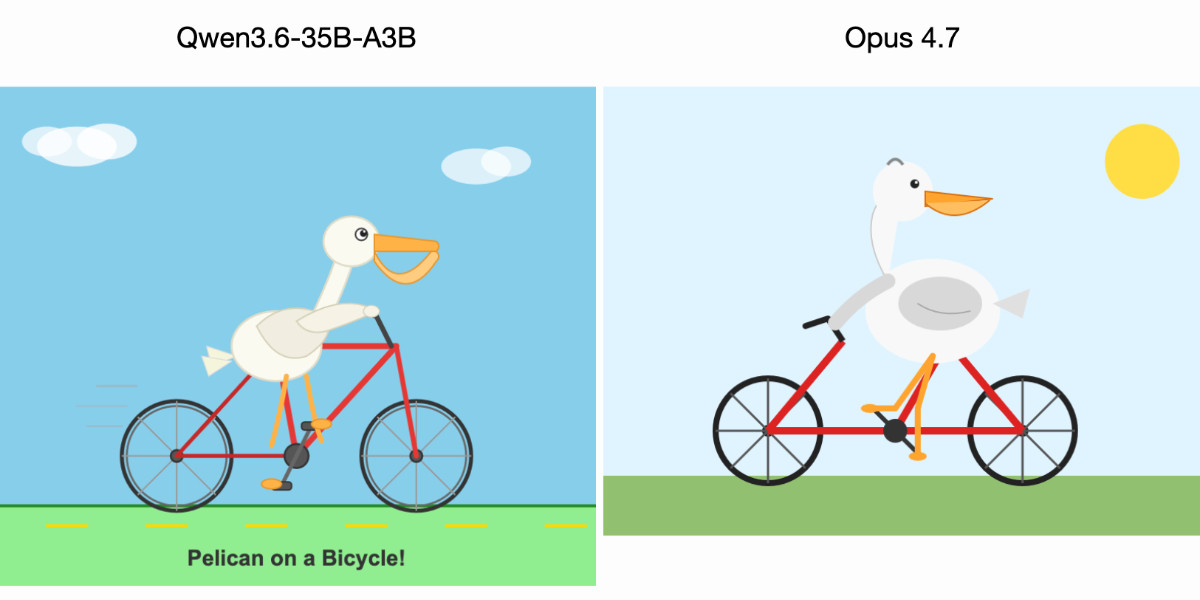
Simon Willison shares an intriguing comparison where a locally run Qwen3.6-35B-A3B model generated a superior pelican image compared to Claude Opus 4.7.

Learn optimal strategies for leveraging Claude Opus 4.7 in conjunction with Claude Code to maximize performance and efficiency in your AI development workflows.

Cypress Cloud's Errors tab now offers expanded defaults, accurate flaky test status, and direct Test Replay links to streamline test failure triage.