Back to Daily Feed 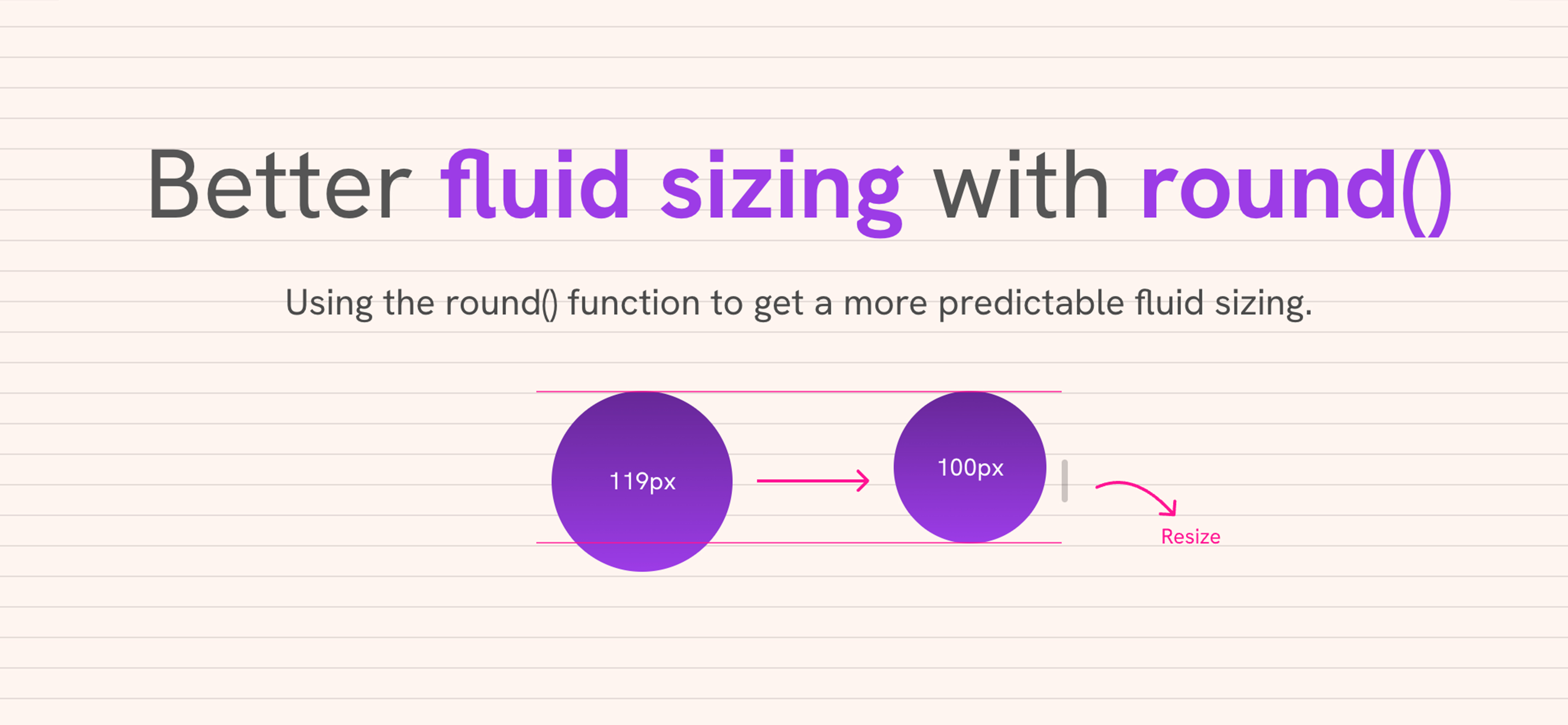
Achieving Better Fluid Sizing with the CSS `round()` Function
Must Read
Originally published on Ahmad Shadeed by Ahmad Shadeed
View Original Article
Share this article:
Summary & Key Takeaways
- The article by Ahmad Shadeed explores the CSS
round()function for enhancing fluid sizing in web design. - It demonstrates how
round()can be used to snap fluid values to specific increments, improving visual consistency. - This technique helps prevent undesirable fractional pixel values and creates more predictable responsive layouts.
- The post likely provides practical examples and use cases for integrating
round()with other CSS functions likeclamp()orcalc().
Our Commentary
Ahmad Shadeed consistently delivers high-quality, practical CSS insights, and this article on round() for fluid sizing is no exception. We've been excited about the new CSS Math Functions, and round() is a powerful tool for designers and developers looking to achieve pixel-perfect (or rather, increment-perfect) fluid layouts. It addresses a common pain point in responsive design where values can become unpredictable. This kind of granular control is exactly what we need to push the boundaries of what's possible with CSS alone, reducing reliance on JavaScript for layout precision.
View Original Article
Share this article: