Back to Daily Feed 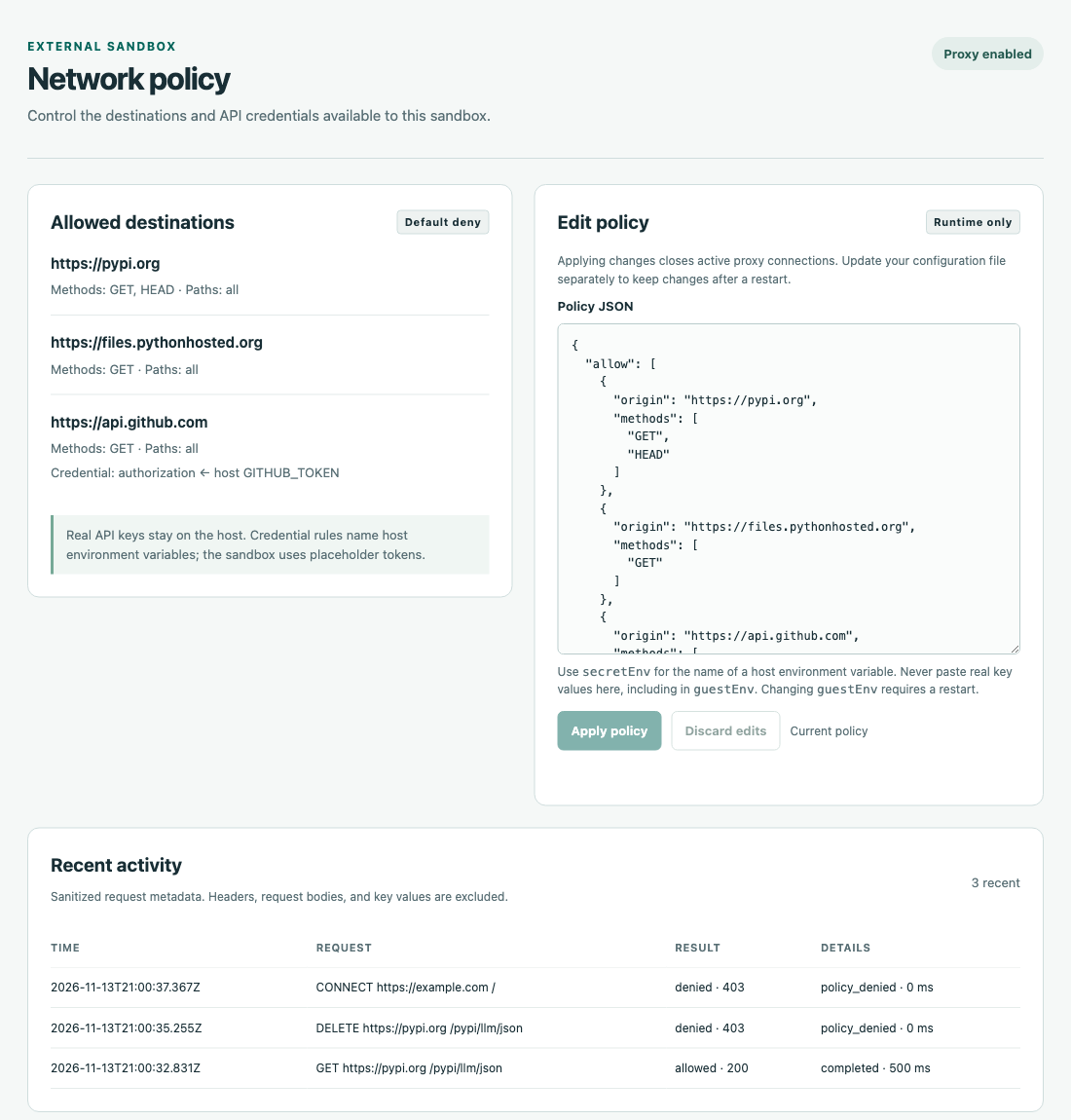
External Sandboxes for Safer AI Coding Agents
Must Read
Originally published on Simon Willison's Weblog by Simon Willison
View Original Article
Share this article:
Summary & Key Takeaways
- The article introduces an 'external sandbox' pattern for safely executing code from AI agents.
- This pattern runs agent code in a dedicated sandbox, separate from the agent itself.
- Three sandbox server implementations are released:
external-sandbox-v86(Node.js/WebAssembly),external-sandbox-container(Python/Apple Containers), andexternal-sandbox-quicksand(Python/Microsoft Quicksand). - All implementations offer a consistent localhost API for configuring agents like Pi, Claude Code, or Codex.
- An optional HTTP/HTTPS allow-list proxy controls agent code communication.
- A credential replacement mechanism allows authenticated API calls without exposing secrets to the agent.
- The approach aims to mitigate risks from mistakes or prompt injection attacks when using local AI models.
Our Commentary
This is a critical piece of work. The security implications of AI agents executing code are massive, and 'external sandboxes' feel like a genuinely robust solution. I've been worried about prompt injection attacks, and this directly addresses that. The use of WebAssembly and containers for isolation is smart. It's a practical, open-source approach to a problem that's only going to get bigger. Simon Willison always delivers these deep, actionable insights.
View Original Article
Share this article: